
Introduction
In the fields of bone tissue reconstruction and soft tissue repair, β‑tricalcium phosphate (β‑TCP) is widely recognized as a high‑performance biomaterial for regenerative applications. Leader Med‑Biotech has independently developed spherical porous β‑TCP microspheres, overcoming the application limitations of traditional block shaped and irregular granular materials. Supported by a comprehensive range of NMPA medical device regulatory qualifications, the microspheres provide a reliable core raw materials for the R&D and mass production of regenerative medical devices.
I. Raw‑Material Foundation: Self‑Produced High‑Purity β‑TCP, Naturally Adapted to Human Tissue Repair
Our microspheres adopt self‑manufactured high‑purity β‑TCP powder as the primary raw material, inheriting three key biological advantages of the material:
1. Excellent Biocompatibility
The calcium‑to‑phosphorus ratio closely resembles that of natural human bone. The material exhibits no cytotoxicity and a low risk of immune rejection or sensitization, helping minimize adverse tissue reactions following implantation.
2. Controlled Degradation Period
The material gradually degrades naturally approximately 6‑24 months, releasing calcium and phosphate ions. These ions can provide essential mineral components for osteogenesis in bone‑defect repair and also stimulates new collagen formation to facilitate the repair of facial soft tissues volume loss.
3. Ultra‑high Purity with Low Risk of Inflammatory
Key parameters such as heavy metals and pyrogens are strictly controlled, with extremely low levels of impurities in the powder. This helps minimize the risk of foreign body reactions, redness, swelling and chronic inflammation following implantation.
II. Three Key Product Advantages for Injectable, Scalable Manufacturing
1. Excellent Formulation Compatibility‑Compatible with Various Gel Systems
The Spherical particles feature low friction and outstanding powder flowability,enabling stable blending with mainstream matrix systems such as bone cement, medical‑grade collagen and sodium hyaluronate. The formulations remain uniform without phase separation or agglomeration, making them well suited for the large‑scale production of injectable orthopedic bone graft materials and medical aesthetic filling gels.
2. Standard Porous Spherical Structure‑Optimized for Both Injection & Regeneration
With a standard particle size of 20‑80 μm, the microspheres feature a smooth, rounded surface and low injection resistance, enabling smooth delivery during procedures. The interconnected porous architecture forms a 3D regenerative scaffold to support cell adhesion and ingrowth of new blood vessels.
For bone defect filling, the microspheres offer improved conformity to the defect site. For aesthetic correction of soft‑tissue depressions, it can carry bioactive growth factors to realize sustained release and enhance repair outcomes.
3. Stable Physicochemical Properties‑Controlled Batch‑to‑Batch Consistency
With Stable composition and microstructure, the porous microspheres maintain key properties‑including microporous structure, biodegradability and cell compatibility‑following irradiation sterilization and long‑term storage. This helps ensure consistent and uniform quality across batches of downstream finished product.
III. Microscopic SEM & Histological Validation for Visualized Regenerative outcome
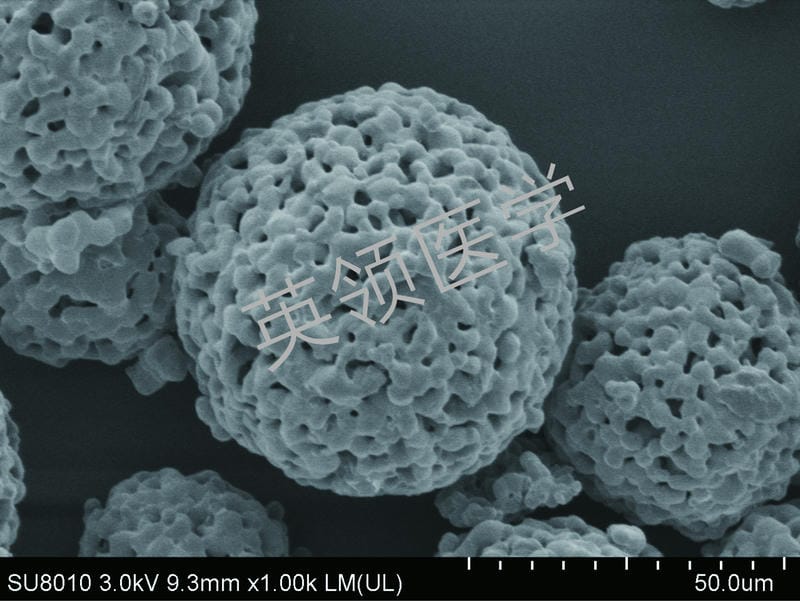
1. Microscopic morphology: Intact Spherical Shape+ 3D Interconnected porous Network
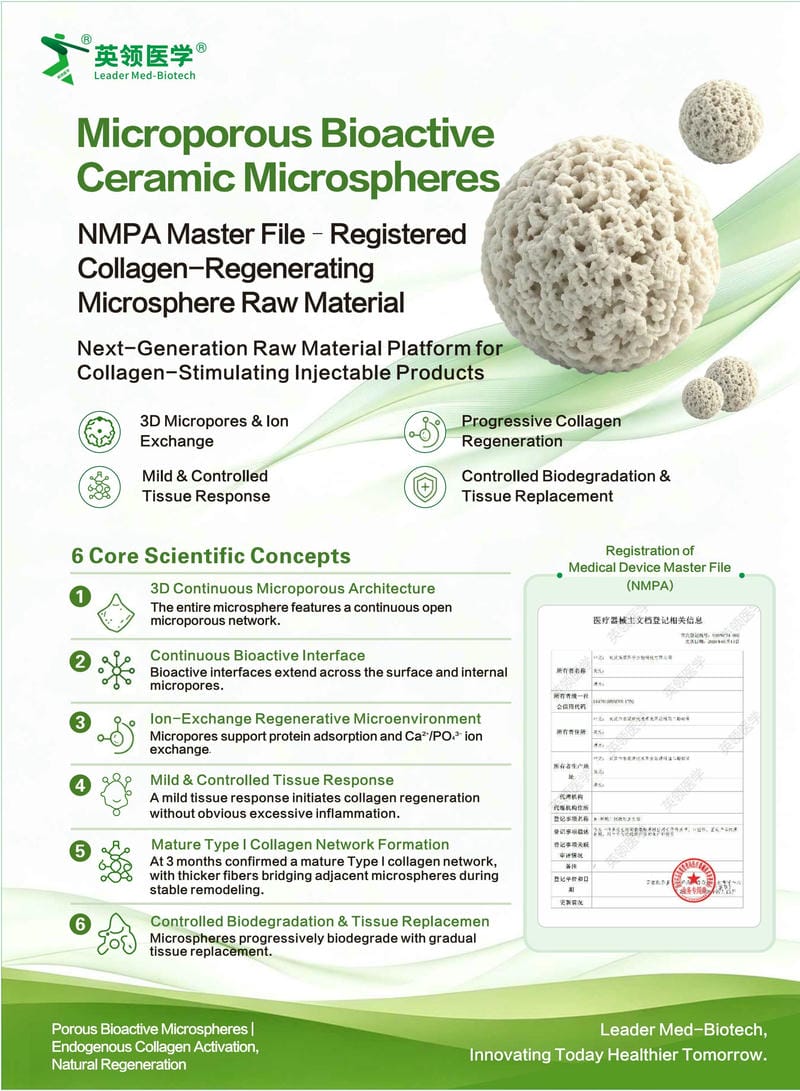
Scanning Electron Microscopy (SEM) results clearly demonstrate that the microspheres maintain a highly intact spherical morphology, with uniformly distributed and interconnected sponge‑like open pores throughout the particles. The relatively consistent pore size provides ample space for cell infiltration and tissue ingrowth.
2. In‑vivo histological sections: visualize the complete repair process
We conducted in vivo implantation studies in animal models, with histological sections providing direct visualization of the material’s regenerative performance and its interaction with surrounding tissues.
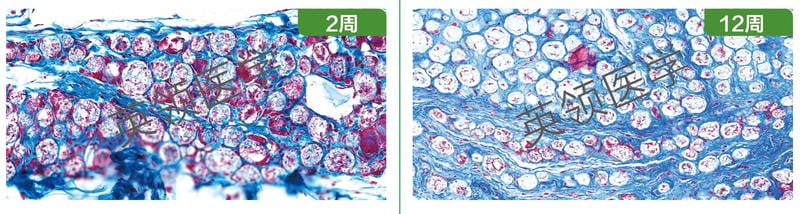
Two Weeks Post‑Implantation: Tissue fluid rapidly permeates deep into the microporous structure of the microspheres. Substantial new collagen deposition is observed around the material, accompanied by only minimal transient inflammation and no evidence of tissue necrosis.
Twelve Weeks Post‑Implantation: Continuous and dense type‑I collagen network forms in gaps between microspheres. No chronic inflammation or fibrous capsule encapsulation occurs. The material integrates perfectly with host tissue.
IV. Comprehensive Regulatory Compliance Support to Simplify Downstream Registration
1. Reliable physicochemical Characterization; customizable purity and particle‑size
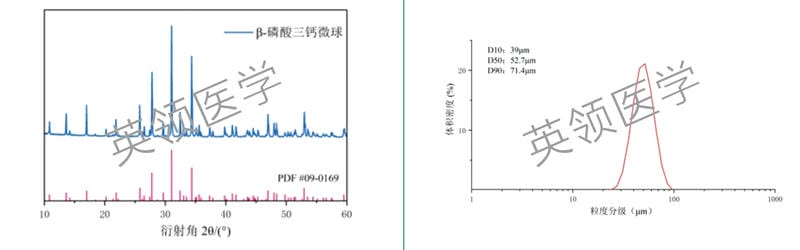
X‑ray Diffraction (XRD): The diffraction pattern shows a complete match with ICDD PDF card No. 09‑0169, with no impurity peaks, confirming that the raw material meets medical‑grade purity requirements.
Particle Size Distribution: The particle size follows a normal distribution, with a standard specification of D50=52.7 μm (D10=39 μm, D90=71.4 μm). Customized particle size ranges are available to meet specific customer requirements.
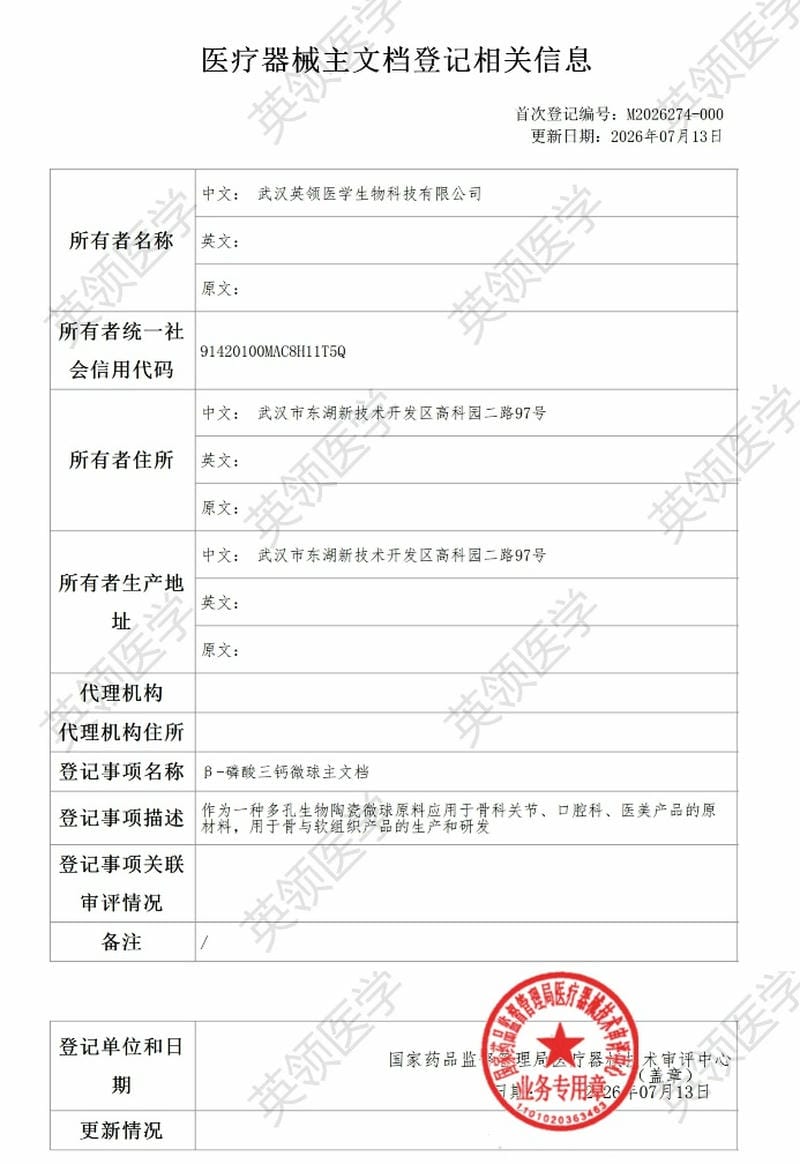
2. NMPA Medical Device Master File Registration for Traceable Compliance
Medical Device Master File has been registered with NMPA (Registration No. M2026274000). Officially filed as raw material for orthopedic and joint‑related medical devices, dental medical devices, and aesthetic regenerative medical devices. Downstream manufacturers may reference this Master file directly in their medical device registration submissions, greatly shortening registration timelines with official authoritative compliance validation.
The registration provides an official regulatory record supporting the compliance, safety, and traceability of the raw material.
3. Multiple stock specifications covering lab‑scale trial to mass production
Available stock sizes: 0.25 g, 0.5 g, 1.0 g, 2 g, 5 g, 10 g, 20 g, 50 g, 100 g. Covers lab R&D, pilot scale‑up and full‑scale industrial production.
Closing Statement
Leader Med‑Biotech specializes in the R&D and manufacturing of bioceramic regenerative biomaterials. Our proprietary porous β‑TCP microspheres combine three key advantages: high‑purity raw materials, well‑controlled porous structures, and comprehensive regulatory credentials. We provide integrated material solutions for medical‑device enterprises in orthopedic bone grafting, aesthetic soft‑tissue filling, oral and dental restoration.
For sample evaluation, customized particle size, or inquiries regarding NMPA Medical Device Master File referencing, please feel free to contact us. We look forward to exploring potential cooperation opportunities with you.
Location of the Wuhan R&D headquarters: No.97, Gaoke 2nd Road, East Lake High- Tech Development Zone, Wuhan.
Location of the laboratory in Hong Kong: 6 Science Park West Road, HKSTP.
Tel: 027-63498011 (Wuhan) 085268466734 (Hong Kong)
Email: info@leadermed-biotech.com


Follow Us